Fixed wiring and circuits
Inspection and testing considers the fixed wiring and circuits, using appropriate tests to assess factors such as continuity, insulation, polarity and fault protection.
Arrange an EICR in Ealing for a home, rental property or commercial premises. We inspect and test the fixed electrical installation, record the findings and provide an Electrical Installation Condition Report showing its condition and any observations that require attention.
Homes • Rental properties • Commercial premises
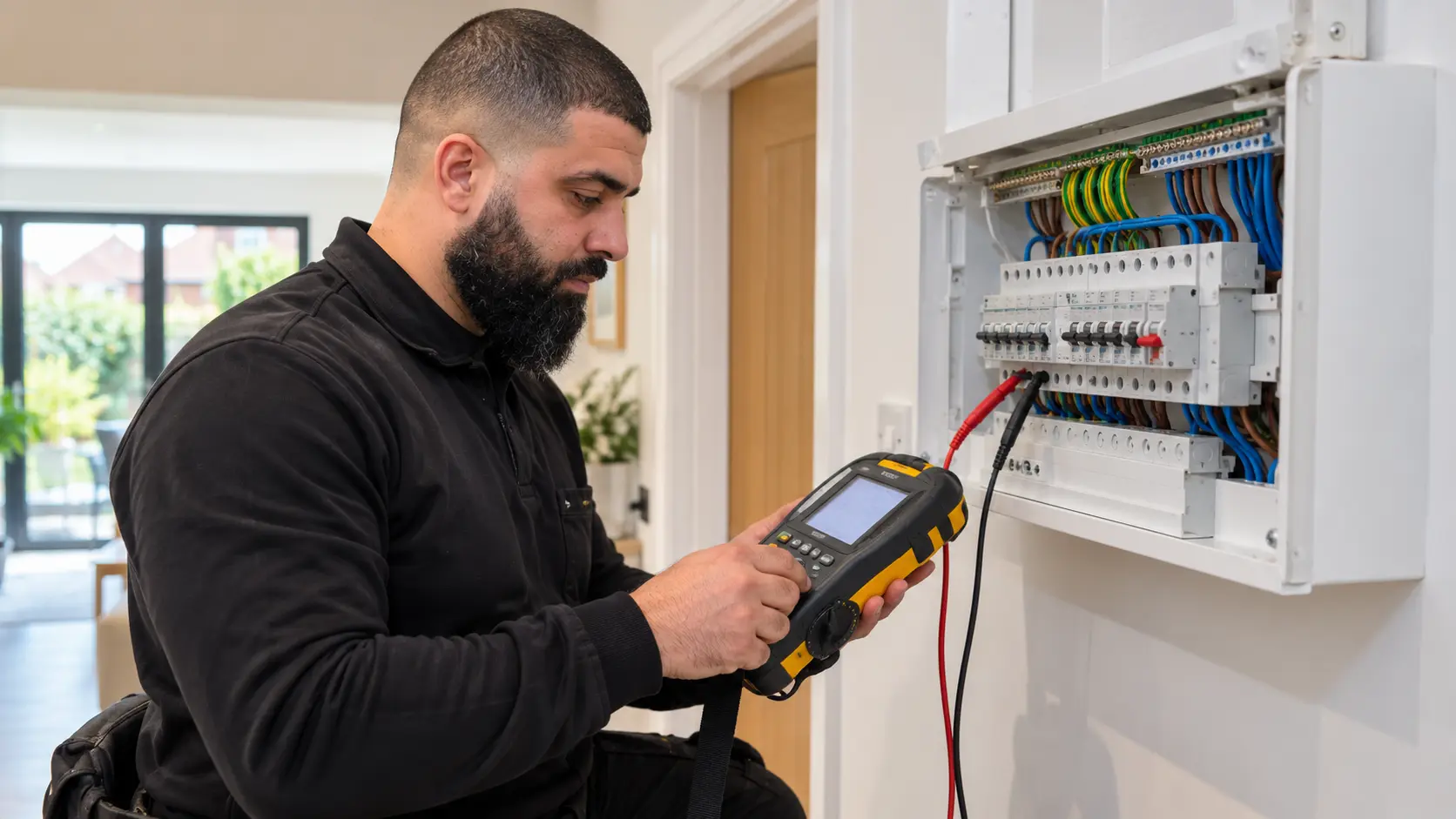
EICR stands for Electrical Installation Condition Report. It is produced after inspection and testing of an existing fixed electrical installation to assess its condition and identify electrical safety issues, deterioration or defects. You may also see people search for an “EICR certificate” or “electrical safety certificate”; the formal document is a condition report.
For customers in Ealing, an EICR can be relevant when managing a rented property, assessing an older or unfamiliar installation, buying a property or reviewing electrical safety within commercial premises.
Inspection and testing considers the fixed wiring and circuits, using appropriate tests to assess factors such as continuity, insulation, polarity and fault protection.
The consumer unit and protective devices are assessed together with the installation's earthing and bonding arrangements and their relevance to electrical safety.
Accessible sockets, switches, lighting points and permanently connected equipment within the agreed scope are considered as part of the fixed installation.
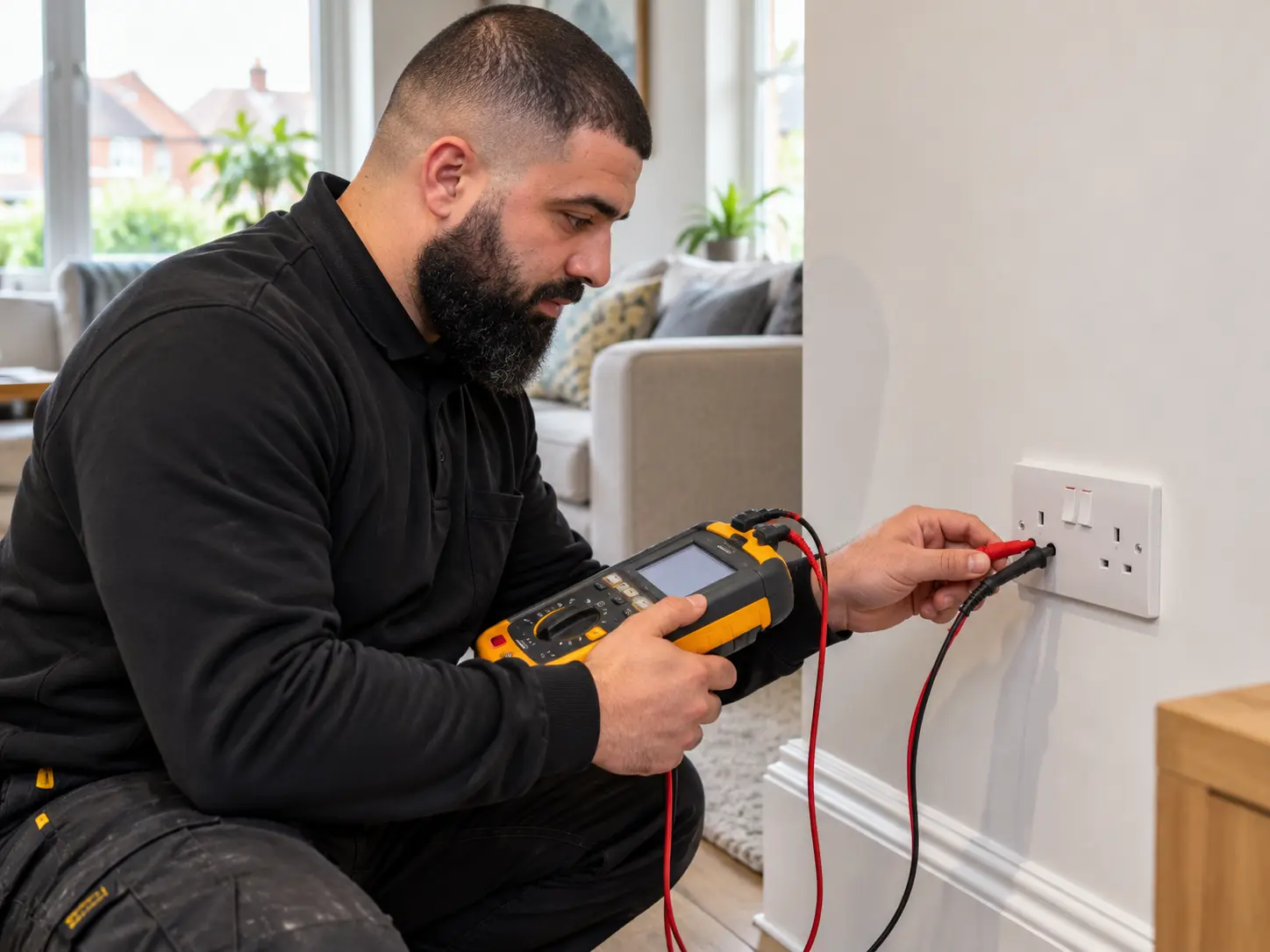
The inspection combines visual checks with electrical testing. Reasonable access is needed to the consumer unit, relevant rooms and electrical points. Parts of the installation may need to be safely isolated while tests are carried out, so temporary interruption to some circuits can be necessary.
We establish the installation and inspection scope, review available previous reports and identify any access limitations.
Accessible parts are checked for visible damage, deterioration, overheating, unsuitable alterations and other concerns.
Appropriate test equipment is used to assess circuits and protective measures, with safe isolation where required.
Observations, test information and classification codes are recorded and the overall condition is stated in the report.
The report records the condition of the installation and the observations found during inspection and testing. Where an observation is relevant to safety, classification codes help explain its significance.
There is a risk of injury and the danger requires immediate attention.
Remedial work is required where a C2 observation is identified.
An improvement is recommended. A C3 observation alone does not make a landlord EICR unsatisfactory.
Further investigation is required without delay to establish the nature or extent of the concern.
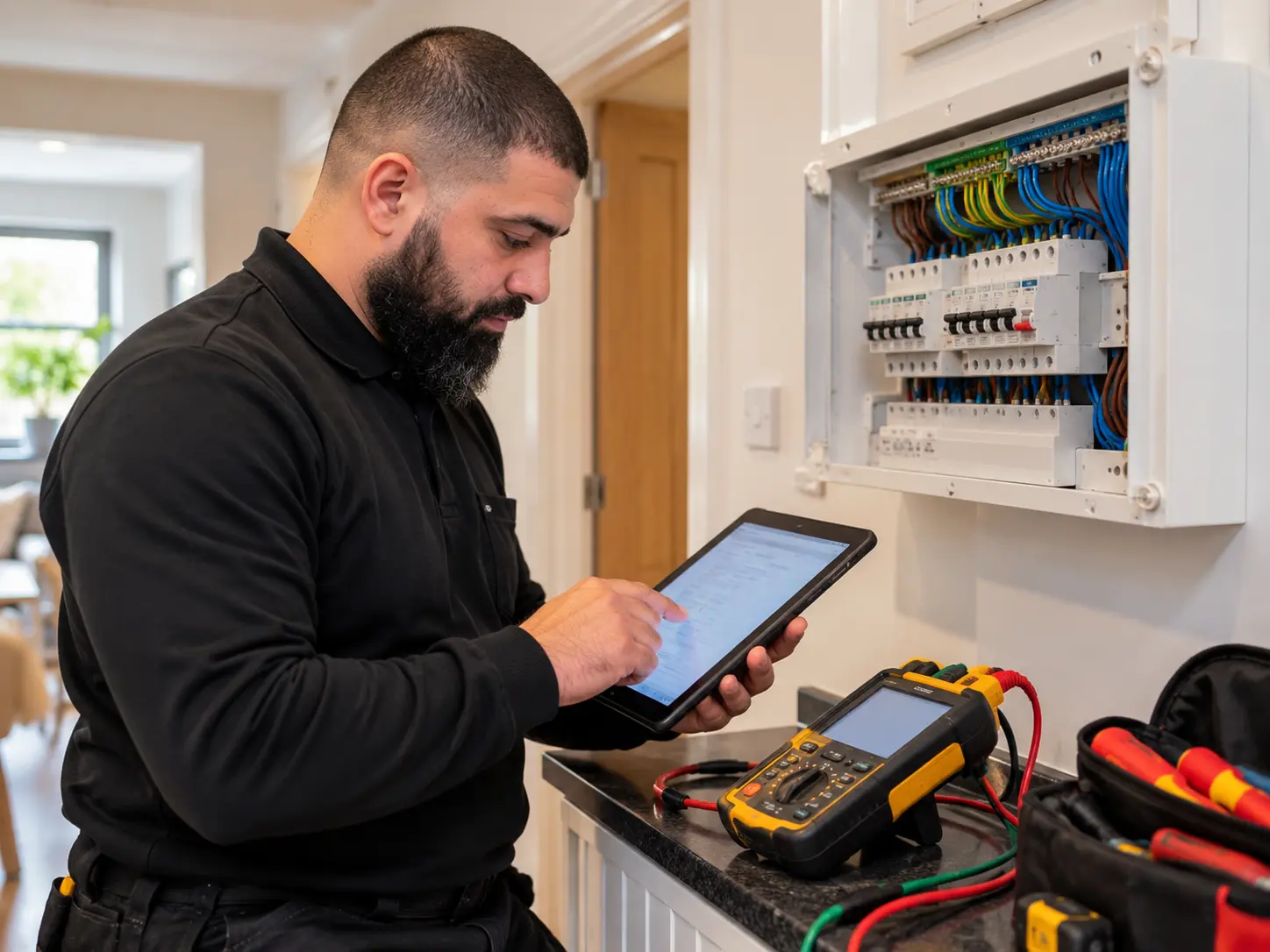
An unsatisfactory EICR does not automatically mean that a property needs a complete rewire or a new consumer unit. The correct next step depends on the individual observations and classifications recorded in the report.
C1 and C2 observations require remedial attention, while FI indicates that further investigation is required. The relevant defect can then be assessed and the appropriate work agreed. Where a specific fault is identified, our Electrical Repairs & Fault Finding in Ealing page covers repair work. If the findings specifically concern the board or wider wiring, see Consumer Unit Replacement Ealing or House Rewiring Ealing.
The reason for arranging an EICR differs according to the property and the person responsible for it. Landlord duties should not be confused with recommendations for owner-occupied homes or electrical-safety management in commercial premises.
Landlords covered by the electrical-safety regulations in England must ensure the electrical installation is inspected and tested by a qualified person at least every five years, with the report also stating when the next inspection is due.
Existing tenants must receive a copy within 28 days of the inspection; a new tenant must receive the current report before occupying the property. A new EICR is not automatically required for every change of tenant where a current compliant inspection already exists and no outstanding work requires a fresh inspection.
Where required remedial or investigative work is identified, the current rules set deadlines for completing it and providing the relevant confirmation.
Landlord information last reviewed: 4 October 2026.
Owner-occupiers do not have the same statutory EICR duty as landlords simply because they own and live in the property. An EICR can nevertheless provide a useful assessment of an existing installation, particularly where its age, alteration history or previous inspection history is unclear.
Periodic inspection and testing can form part of managing the safety of a fixed electrical installation at a workplace or commercial property. There is not a universal statutory “commercial EICR every five years” rule equivalent to the residential landlord requirement. The appropriate inspection regime depends on the installation, its use, condition and relevant duties. For wider work, see our Commercial Electrician Ealing service.
Rather than publish an artificial “from” price, we quote according to the property and the electrical installation being inspected. The time and scope can vary substantially between a smaller home with a straightforward installation and a larger or more complex property.
Factors that can affect an EICR quotation include:
For the most useful quotation, send us:
We arrange EICR inspection and testing for homes, rental properties and relevant commercial premises across Ealing, including W5 and W13. Our local coverage includes Ealing Broadway, West Ealing, South Ealing, Ealing Common, Northfields and nearby areas we serve.
Send your postcode and property details and we can discuss the inspection and quotation.
An EICR is an Electrical Installation Condition Report produced after inspection and testing of an existing fixed electrical installation. It records its condition, test information and relevant observations.
“Electrical safety certificate” and “EICR certificate” are common search terms, but EICR formally means Electrical Installation Condition Report. The document produced is a report on the condition of the fixed installation.
Cost depends on factors such as property size, circuit count, number of consumer units, installation complexity and access. Send us your property details for a quotation rather than relying on a generic price.
There is no single duration for every property. Inspection time varies with the size of the property, number of circuits and the complexity and condition of the electrical installation.
Parts of the installation may need to be safely isolated during electrical testing, so temporary interruption to some circuits can be necessary. Tell us in advance about essential or sensitive equipment.
For landlords covered by the applicable England regulations, electrical installations must be inspected and tested by a qualified person at least every five years, or sooner where the current report requires an earlier next inspection.
No, not automatically. Where a current compliant inspection already exists within the required period and the report remains current, the latest report can be supplied to the new tenant rather than automatically repeating the inspection.
C1 means danger present, C2 means potentially dangerous, C3 means improvement recommended, and FI means further investigation required without delay. The report explains which observations apply to the installation inspected.
The observations causing the unsatisfactory result need appropriate remedial attention or investigation. The required work depends on the actual defects recorded; an unsatisfactory result does not automatically mean a full rewire.
An EICR is focused on the fixed electrical installation. Ordinary portable plug-in appliances are distinct from that scope, so tell us separately if appliance testing is required.
Owner-occupiers do not have the same statutory EICR requirement as landlords simply because they own and occupy their home. An EICR can still be useful for assessing the condition of an existing installation.
No. The required action depends on the individual observations and classification codes. Some issues may need a localised repair or further investigation; wider wiring work is only relevant where the findings support it.
The EICR records the condition of the installation. If it identifies work outside the inspection itself, the relevant service can be considered separately.
Send your Ealing postcode, property type and size, whether it is a home, rental or commercial premises, and the number of consumer units if known.
Domestic and commercial electrical work, from repairs and upgrades to complete installations.